emt trauma scenarios pdf
Emergency Medical Technicians (EMTs) frequently encounter traumatic incidents‚ demanding rapid assessment and intervention skills.
This guide provides essential knowledge for effective trauma care in the prehospital setting.
What is a Trauma Scenario?
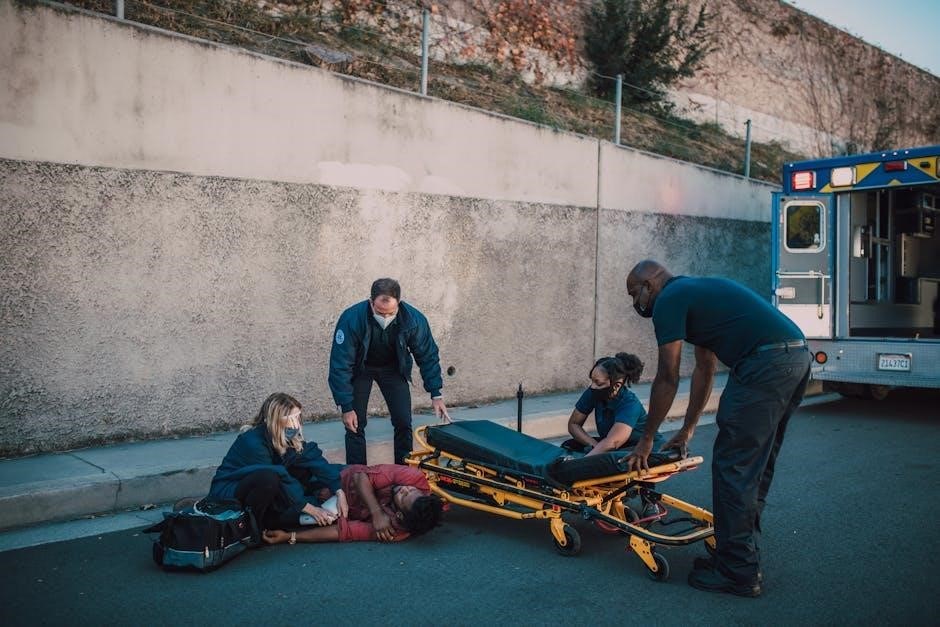
A trauma scenario‚ in the context of EMT training‚ is a simulated emergency involving significant injury. These scenarios realistically replicate the chaotic and high-stress environments encountered in real-world calls.

They aren’t simply textbook cases; they involve dynamic elements like distressed patients‚ bystanders‚ and challenging scene conditions. Scenarios can range from motor vehicle collisions and falls to penetrating trauma and industrial accidents.
The purpose is to test an EMT’s ability to apply knowledge‚ prioritize actions‚ and work effectively as part of a team under pressure‚ fostering critical thinking and procedural competency.
The Importance of Scenario-Based Training
Scenario-based training is crucial for EMTs because it bridges the gap between theoretical knowledge and practical application. Unlike static lectures or skills stations‚ scenarios demand real-time decision-making and adaptation.
This immersive approach enhances critical thinking‚ communication‚ and teamwork skills – all vital in trauma care. Repeated exposure to diverse scenarios builds confidence and reduces anxiety when facing actual emergencies.

Furthermore‚ it allows for the identification of individual and team weaknesses‚ facilitating targeted improvement. Effective scenario training ultimately leads to better patient outcomes and increased EMT preparedness.
Scope of this Guide: Focusing on Common EMT Trauma
This guide concentrates on trauma scenarios frequently encountered by Emergency Medical Technicians in the field. We will explore injuries to the head‚ neck‚ chest‚ abdomen‚ and extremities‚ alongside management of severe hemorrhage and related complications.
The focus remains on prehospital assessment and initial interventions‚ aligning with the EMT scope of practice. While comprehensive trauma care is multifaceted‚ this resource prioritizes practical skills and knowledge essential for stabilization and transport.
Less common or highly specialized trauma situations will not be covered in detail‚ allowing for a focused learning experience on prevalent emergency presentations.
Initial Assessment & Scene Safety
Prioritizing scene safety and a systematic assessment are crucial first steps in trauma care‚ ensuring both provider and patient well-being during emergencies.
Scene Size-Up & BSI
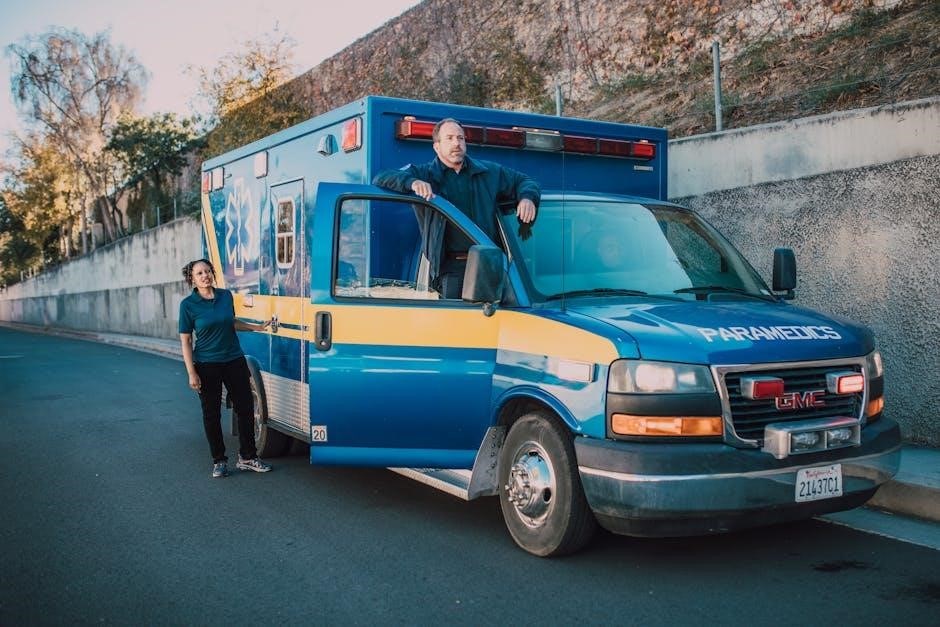
The initial scene size-up is paramount‚ involving a methodical evaluation of the environment for hazards – traffic‚ unstable structures‚ hazardous materials‚ or potential violence. Ensure scene safety before approaching the patient.
Immediately implement Body Substance Isolation (BSI)‚ donning gloves‚ eye protection‚ and potentially a mask and gown‚ to protect against infectious materials.
Determine the number of patients‚ need for additional resources‚ and establish a clear mechanism of injury or chief complaint.
This initial assessment informs subsequent actions and prioritizes patient care.
Primary Survey: ABCDEs
The primary survey utilizes the ABCDE mnemonic to rapidly identify and address life-threatening conditions. Airway assessment ensures a patent airway; interventions may include jaw-thrust or suctioning. Breathing evaluation assesses respiratory rate‚ depth‚ and effort‚ looking for signs of pneumothorax or hemothorax. Circulation focuses on pulse‚ perfusion‚ and controlling hemorrhage. Disability briefly assesses neurological status using the AVPU scale. Exposure involves completely exposing the patient to identify all injuries‚ while preventing hypothermia.

Rapid Trauma Assessment
Following the primary survey‚ a rapid trauma assessment is performed to identify additional injuries. This is a quick‚ head-to-toe examination‚ focusing on identifying any signs of trauma not immediately apparent. Palpate the skull‚ face‚ chest‚ abdomen‚ pelvis‚ and extremities. Assess for tenderness‚ deformity‚ or crepitus.
Briefly check distal pulses and neurological function in all extremities. Remember‚ this is not a comprehensive exam; its purpose is to quickly uncover potentially life-threatening conditions requiring further intervention.

Specific Trauma Scenarios ౼ Head & Neck
Head and neck injuries present unique challenges‚ requiring careful assessment of neurological function‚ airway patency‚ and potential spinal cord compromise.
Head Injury: Concussion & Skull Fracture
Head injuries range from mild concussions to severe skull fractures‚ each demanding a specific assessment and management approach. Recognizing subtle signs of concussion‚ like altered mental status or memory loss‚ is crucial.
A skull fracture may be open or closed‚ with open fractures carrying a higher risk of infection. Assess for clear fluid (CSF) leaking from the ears or nose‚ indicating a potential basilar skull fracture.
Prioritize airway management and oxygenation‚ while diligently monitoring the patient’s neurological status. Implement appropriate spinal immobilization techniques to prevent further injury. Transport is always indicated for suspected head trauma.
Assessment of Altered Mental Status
Evaluating altered mental status in trauma patients requires a systematic approach. Utilize the AVPU scale (Alert‚ Verbal‚ Painful‚ Unresponsive) to quickly gauge responsiveness. Assess the patient’s orientation to person‚ place‚ and time.
Look for signs of neurological deficits‚ such as unequal pupils‚ weakness‚ or numbness. Consider potential causes beyond head injury‚ including hypoxia‚ hypoperfusion‚ and drug intoxication.
Frequent reassessment is vital‚ as mental status can rapidly change. Document all findings clearly and communicate them to receiving medical personnel. A thorough neurological assessment guides appropriate treatment and transport decisions.
Cervical Spine Immobilization
Maintaining cervical spine immobilization is paramount in trauma patients with potential neck injuries. Apply a rigid cervical collar‚ ensuring proper fit and avoiding excessive flexion‚ extension‚ or rotation.
Manual stabilization must be maintained until the collar is secured and the patient is properly packaged. Utilize a head immobilization device alongside the collar for enhanced stability during movement.
Log-roll the patient with coordinated team effort when necessary‚ minimizing spinal movement. Continuously monitor for any neurological changes and document all interventions. Proper immobilization prevents further injury.
Facial Trauma & Airway Management
Facial fractures often compromise the airway‚ requiring vigilant assessment and intervention. Swelling and bleeding can rapidly obstruct passage‚ demanding prompt action.
Assess for signs of airway obstruction – stridor‚ gurgling‚ or difficulty speaking. Be prepared for potential difficult intubation due to anatomical distortion. Utilize adjuncts like oropharyngeal or nasopharyngeal airways cautiously.
Suction frequently to clear secretions and blood. Consider surgical airway as a last resort if conventional methods fail. Continuous monitoring of oxygen saturation and respiratory rate is crucial.
Suspected Maxillofacial Fractures
Maxillofacial fractures require careful handling to avoid further injury and airway compromise. Palpate for crepitus‚ instability‚ and step-off deformities. Assess for periorbital ecchymosis (“raccoon eyes”) and postauricular hematoma (Battle’s sign)‚ indicating potential skull base fracture.
Maintain spinal immobilization until cervical spine injury is ruled out. Avoid excessive head movement during assessment. Support the jaw during palpation to minimize pain and potential displacement of fracture fragments.
Monitor for signs of increasing airway obstruction due to swelling or bleeding. Prepare for potential difficult airway management.
Managing a Compromised Airway
A compromised airway in the setting of facial trauma demands swift intervention. Utilize jaw-thrust maneuver instead of head-tilt/chin-lift if cervical spine injury is suspected. Suction frequently to clear blood‚ secretions‚ and fractured teeth.
Consider an oropharyngeal or nasopharyngeal airway‚ cautiously‚ assessing for further injury. Be prepared for potential difficulty with bag-valve-mask ventilation due to facial instability. Early consideration of advanced airway techniques‚ like intubation‚ may be necessary.
Maintain oxygenation and monitor the patient closely for signs of worsening respiratory distress.

Specific Trauma Scenarios ⎻ Torso
Torso trauma presents significant challenges‚ often involving life-threatening injuries to the chest‚ abdomen‚ and associated vascular structures. Rapid recognition is key.
Chest Trauma: Pneumothorax & Hemothorax
Chest injuries are common in trauma‚ with pneumothorax (collapsed lung) and hemothorax (blood in the pleural space) being particularly concerning. A pneumothorax occurs when air enters the pleural space‚ disrupting normal breathing mechanics.
Signs include shortness of breath‚ chest pain‚ and decreased or absent lung sounds on the affected side.
Hemothorax develops from bleeding within the pleural space‚ compressing the lung. Assessment reveals similar symptoms‚ potentially with signs of hypovolemic shock.
Prompt recognition and appropriate interventions‚ like oxygen administration and preparing for potential needle decompression or chest tube insertion‚ are crucial for positive patient outcomes.
Recognizing Tension Pneumothorax
A tension pneumothorax is a life-threatening emergency where air accumulates in the pleural space‚ creating positive pressure that collapses the lung and shifts mediastinal structures. This compromises venous return to the heart‚ leading to obstructive shock.
Key indicators include severe respiratory distress‚ tracheal deviation away from the affected side‚ jugular vein distension‚ and cyanosis. Hypotension is a late and ominous sign. Rapid recognition is paramount‚ as this condition requires immediate needle decompression to relieve the pressure and restore adequate ventilation and circulation.
Needle Decompression Considerations
Needle decompression‚ typically performed in the 2nd intercostal space at the midclavicular line‚ is a critical intervention for tension pneumothorax. However‚ proper technique and anatomical knowledge are vital. Utilize a 14-gauge‚ 3.25-inch needle.
Be aware of potential complications‚ including injury to underlying structures like the lung‚ heart‚ or major vessels. A rush of air confirms correct placement. Following decompression‚ monitor the patient closely for improvement in vital signs and respiratory effort. Document the procedure thoroughly‚ including the time and location.
Abdominal Trauma: Internal Bleeding
Blunt and penetrating trauma to the abdomen pose a significant risk of internal bleeding from damaged organs like the liver‚ spleen‚ or intestines. Early recognition is crucial. Patients may present with abdominal pain‚ distension‚ guarding‚ or rigidity.
Hypotension and tachycardia are late signs‚ indicating substantial blood loss. Maintain a high index of suspicion in all trauma patients. Focus on preventing further injury and initiating rapid transport. Aggressive fluid resuscitation may be necessary‚ but avoid over-resuscitation.
Signs & Symptoms of Internal Bleeding
Identifying internal bleeding requires a keen assessment. Early signs include abdominal pain‚ tenderness‚ distension‚ and bruising (especially flank ecchymosis or Cullen’s sign). Patients may report feelings of dizziness or lightheadedness.
As blood loss progresses‚ look for tachycardia‚ hypotension‚ pale‚ cool‚ and clammy skin‚ and altered mental status. A decreasing level of consciousness is a grave sign. Remember that signs can be subtle initially‚ requiring frequent reassessment.
Maintaining Hemodynamic Stability
Prioritizing hemodynamic stability is crucial in abdominal trauma. Begin with high-flow oxygen administration and establish IV access – ideally two large-bore lines. Rapidly infuse isotonic crystalloid solutions‚ like normal saline or Lactated Ringers‚ to support blood volume.
Monitor vital signs continuously‚ assessing for trends. Control any external bleeding with direct pressure and consider a pelvic binder if pelvic fracture is suspected. Prepare for potential rapid transport‚ as definitive care requires surgical intervention.

Specific Trauma Scenarios ౼ Extremities & Other
Extremity and other trauma cases present unique challenges‚ requiring focused assessment and intervention for fractures‚ amputations‚ and junctional bleeding.
Pelvic Fractures & Junctional Hemorrhage
Pelvic fractures are often associated with significant blood loss due to the rich vascular network in this region. Junctional hemorrhage‚ bleeding from areas difficult to control with traditional tourniquets – groin‚ axilla‚ and base of the neck – frequently accompanies these injuries. Recognizing pelvic instability is crucial; look for pain upon palpation‚ bruising‚ or deformity.
Immediate application of a pelvic binder is paramount to stabilize the pelvis and reduce hemorrhage.
Remember to continuously monitor the patient’s hemodynamic status and prepare for potential rapid deterioration. Effective communication with the receiving facility regarding suspected pelvic fractures is essential.
Recognizing Pelvic Instability
Identifying pelvic instability requires a systematic approach during the rapid trauma assessment. Gently palpate the iliac crests‚ symphysis pubis‚ and posterior superior iliac spines. Pain elicited upon palpation is a significant indicator. Assess for any visible deformity‚ bruising‚ or crepitus. Log-roll the patient cautiously‚ maintaining spinal precautions‚ and reassess for movement or increased pain.
Be mindful that altered mental status or distracting injuries can mask signs of instability. A high index of suspicion is vital‚ especially in mechanisms involving significant force‚ such as motor vehicle collisions or falls from height.
Application of Pelvic Binder
Proper pelvic binder application is crucial for stabilizing suspected pelvic fractures and minimizing hemorrhage. Center the binder over the greater trochanters‚ ensuring the anterior portion doesn’t compress the perineum. Tighten the binder incrementally‚ reassessing for pain or increased instability with each adjustment. Avoid excessive tightening‚ which can cause further injury.
Document the time of application and the patient’s response. Regularly reassess the binder’s security during transport. Remember‚ the binder’s purpose is to externally stabilize the pelvis‚ reducing movement and bleeding.
Amputations & Severe Bleeding Control
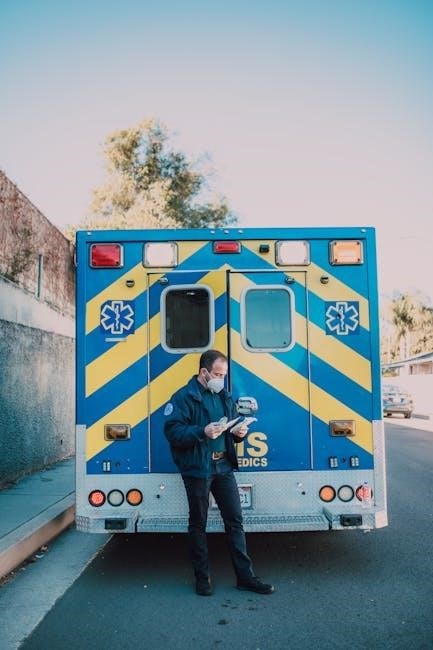
Amputations present significant hemorrhage control challenges. Immediate direct pressure is paramount‚ utilizing available dressings and applying firm‚ consistent force. Tourniquets are indicated for life-threatening extremity bleeding unresponsive to direct pressure; apply proximal to the injury‚ documenting the time. Consider wound packing with hemostatic agents for junctional wounds where tourniquets are ineffective.
Maintain warmth and monitor for shock. Rapid transport is essential‚ continuing bleeding control measures en route. Proper packaging of the amputated part is also important‚ if possible.
Direct Pressure & Tourniquet Application
Direct pressure remains the initial intervention for hemorrhage‚ applying firm‚ consistent force directly onto the wound with sterile dressings. Elevate the limb if possible. If bleeding persists‚ a tourniquet becomes necessary. Apply 2-3 inches above the wound‚ tightening until bleeding stops. Crucially‚ document the application time.
Assess distal pulses after application; absence confirms effectiveness. Never cover a tourniquet‚ and communicate its presence clearly to receiving facilities. Tourniquets are limb-saving devices when appropriately utilized.
Wound Packing Techniques
Wound packing is vital for deep‚ narrow wounds where direct pressure is insufficient. Utilize hemostatic gauze‚ if available‚ or sterile dressings. Forcefully pack the wound cavity‚ filling all spaces to apply pressure from within. Maintain continuous pressure for at least five minutes‚ even if bleeding doesn’t immediately cease. Avoid removing packing once applied‚ as this can disrupt clot formation. Secure the packing with a pressure bandage. Communicate packing presence to receiving facilities for appropriate management.
Transport & Ongoing Care
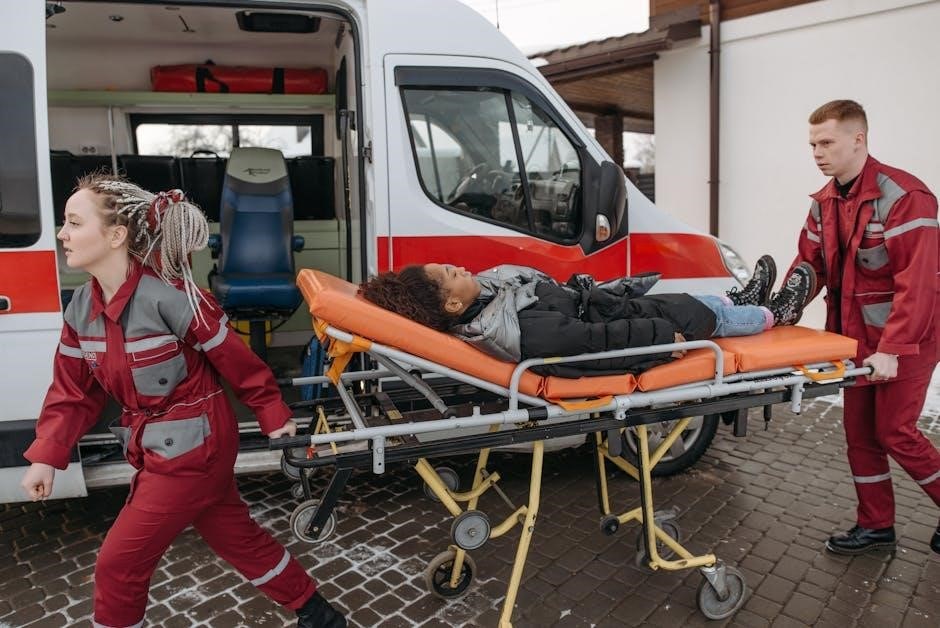
Prompt and safe transport is crucial‚ alongside continuous reassessment of the patient’s condition. Effective communication with the hospital ensures optimal care delivery.
Packaging the Trauma Patient
Securely immobilizing the trauma patient is paramount during transport to prevent further injury. This involves utilizing a combination of spinal boards‚ cervical collars‚ and appropriate strapping systems. Consider the patient’s specific injuries – a pelvic fracture necessitates specialized pelvic binders‚ while suspected spinal injuries require complete spinal immobilization.
Padding should be used generously to maintain alignment and comfort. Regularly reassess the patient’s airway‚ breathing‚ and circulation after packaging. Ensure access points remain clear for ongoing assessment and intervention throughout transport. Proper packaging minimizes movement and protects the patient from exacerbating their condition.
Communication with Receiving Facility
Early and consistent communication with the receiving hospital is crucial for optimal patient care. Utilize clear‚ concise language when providing a detailed report‚ including the mechanism of injury‚ vital signs‚ interventions performed‚ and the patient’s current condition.
Alert the hospital to any potential critical issues‚ such as suspected spinal injuries or significant blood loss. Provide an estimated time of arrival (ETA) and request confirmation of resource availability. A comprehensive report allows the hospital to prepare appropriately‚ streamlining the transfer of care and improving patient outcomes.
Ongoing Assessment During Transport
Continuous monitoring of the trauma patient is paramount during transport. Repeat vital signs every five minutes‚ or more frequently if the patient’s condition changes. Assess for any new injuries or deterioration in existing ones.
Re-evaluate the effectiveness of interventions‚ such as oxygen administration or bleeding control measures. Communicate any significant changes to the receiving facility immediately. Maintain a high index of suspicion for developing complications‚ like tension pneumothorax or hypovolemic shock‚ and be prepared to intervene accordingly.